Views: 0 Author: Site Editor Publish Time: 2026-05-21 Origin: Site
Every parent knows the sudden, dropping panic of losing sight of their child in a crowded space. Whether you are navigating a bustling theme park, traveling through a busy airport, or caring for a neurodivergent child prone to wandering, you need reliable location data. You need it instantly, and you need it to be accurate. Unfortunately, the current consumer market is flooded with conflicting technology and misleading marketing.
Many devices sold as tracking solutions offer a false sense of security. Several popular marketed trackers are merely Bluetooth tags. These devices suffer from severe distance limitations and fail completely in empty areas. Others are cheap, unbranded smartwatches. These often feature terrible battery life and suffer from highly questionable data security practices.
You need a transparent, technical, and implementation-focused framework. This guide cuts through the noise to help you evaluate a true safety device. You will learn how to assess connectivity types, compare hardware designs, and demand strict privacy standards. We will skip the marketing fluff and focus on what actually works. By the end, you will confidently know how to implement the right tracker for your family.
Bluetooth vs. True GPS: AirTags and Bluetooth devices rely on proximity to other phones; true kids GPS trackers use a built-in SIM card and 4G LTE for unlimited range.
Form Factor Matters: Dedicated standalone trackers offer better battery life (3–10 days) and stealth, while a kids tracker phone or smartwatch requires daily charging but adds communication features.
Expect Subscription Costs: Reliable real-time tracking requires cellular data. Hardware price is only part of the Total Cost of Ownership (TCO); factor in monthly SIM/app fees.
Implementation Reality: Geofences should be set to a minimum of 100 meters to prevent false alarms caused by natural GPS drift.
Privacy is Non-Negotiable: Only shortlist devices strictly adhering to COPPA (US) or GDPR (EU) data encryption standards to prevent location data interception.
We must first address the most common misconception in child safety tech. Parents frequently ask why they cannot simply attach a popular Bluetooth tag to their child's backpack. To understand the risk, we must look at the proximity limitation of Bluetooth technology.
Bluetooth tags, like AirTags or Tile devices, lack built-in GPS receivers. They cannot communicate with satellites. Instead, they rely entirely on pinging nearby smartphones to report their location. They hijack ambient Bluetooth connections to send a signal to a central server. This works beautifully if you drop your keys in a crowded coffee shop. However, if your child wanders into a cellular dead zone, tracking fails completely. If they wander into a sparsely populated park or a quiet suburban street, no nearby phones exist to catch the ping. You are left staring at an outdated location from twenty minutes ago. You cannot afford this data blackout during an emergency.
Next, we must consider the cellular advantage. A dedicated Kids GPS Tracker operates fundamentally differently. It features an internal GPS antenna. It uses satellite triangulation to calculate its exact mathematical coordinates anywhere under the sky. After calculating this position, it transmits the data back to your smartphone app via robust cellular networks. By utilizing 4G LTE or LTE-M bands, the device guarantees a persistent connection.
This cellular infrastructure allows for continuous, real-time tracking across massive distances. You can monitor your child across cities, states, or even internationally. You do not have to rely on strangers' phones walking past your child.
Let us establish a strict decision rule for your purchase. You should only purchase Bluetooth tags for stationary or easily replaceable assets. They are perfect for backpacks, luggage, or house keys. However, for moving, unpredictable children, they are inadequate. A cellular-enabled GPS tracker is a mandatory safety requirement for human tracking.
Choosing the right physical design is just as critical as the internal technology. You must match the device's form factor to your child's age, daily routine, and specific behavioral needs.
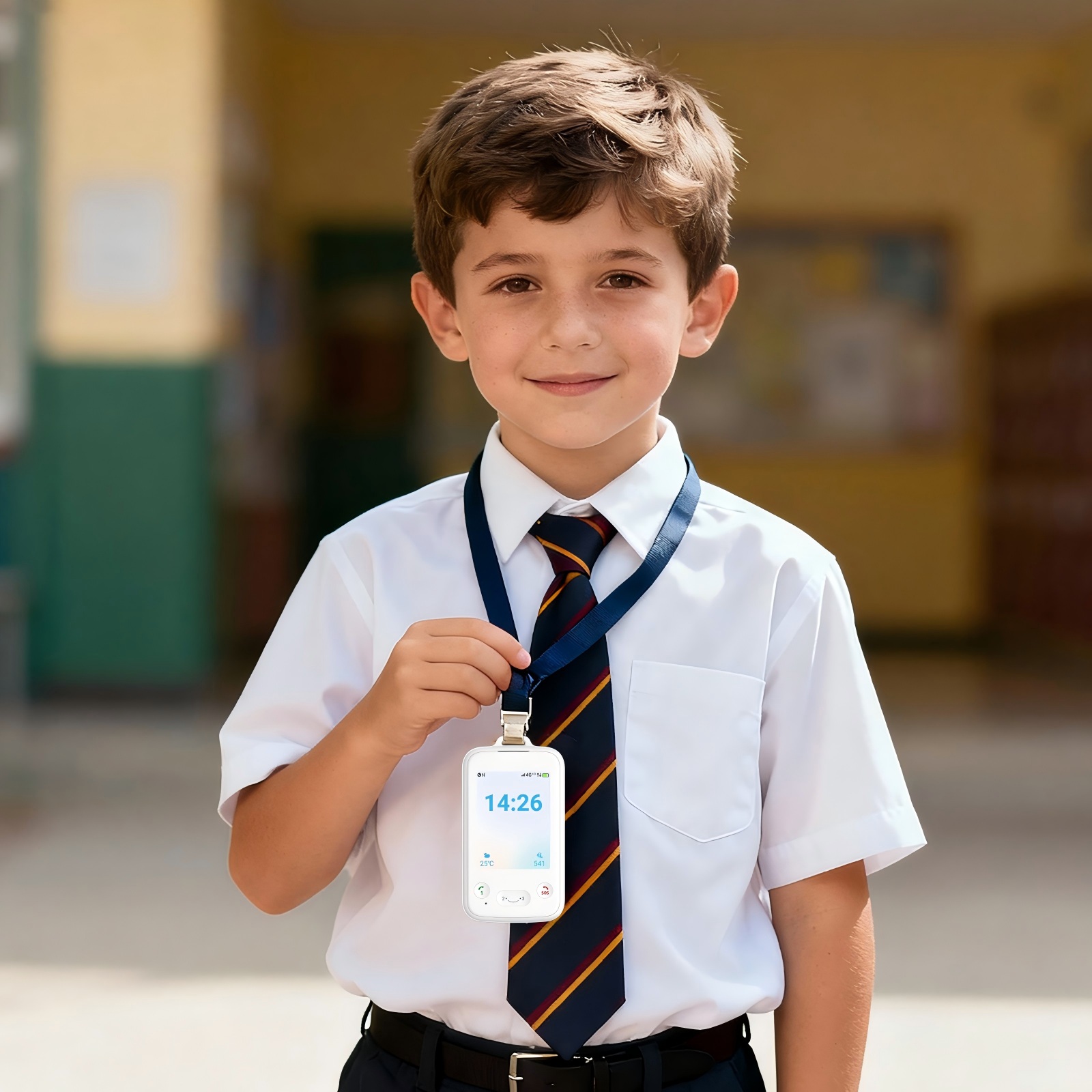
First, let us examine the Kids Tracker Phone or wearable smartwatch. This option typically works best for school-aged children between seven and twelve years old. At this age, children crave independence. They often walk to a friend's house or take the bus alone. They need two-way communication capabilities, but they are not ready for the risks of a fully unrestricted smartphone. A tracker watch provides that middle ground.
However, there are notable trade-offs with watches. Screens consume massive amounts of power. Because of the screen and constant cellular pinging, you will face high battery drain. These devices almost universally require daily charging. If you forget to plug it in at night, the device is useless the next day. Furthermore, games and bright screens can easily distract children in classrooms. Active kids also easily scratch or damage wrist-worn screens during recess.
Alternatively, consider a dedicated, screenless GPS tracker. This specific form factor suits toddlers and children with special needs. Conditions like autism or ADHD often involve wandering or elopement behaviors. These scenarios require a highly discreet, secure device. You can clip these tiny trackers securely to inner clothing. You can even lock them onto shoelaces using sensory-friendly accessories.
The trade-offs here involve functionality versus endurance. You sacrifice the screen and calling features entirely. Yet, you gain superior battery life. A screenless tracker often lasts up to a week on a single charge. It provides passive, distraction-free monitoring that neither you nor the child needs to interact with daily.
Feature Category | Tracker Smartwatch | Screenless Dedicated Tracker |
|---|---|---|
Best Target Age | 7 to 12 Years Old | Toddlers & Neurodivergent Kids |
Average Battery Life | 12 to 24 Hours | 3 to 10 Days |
Communication Type | Two-way Voice Calling & Texts | None (or one-way SOS button) |
Distraction Potential | High (Screens and Apps) | None (Completely passive) |
You need a reliable device when minutes matter most. Many cheap devices look great in photos but fail during actual deployment. Use this comprehensive four-point framework to evaluate location accuracy and physical build quality.
A tracker is only as good as its ping rate. The ping rate is how often the device sends its location to your phone. Look for devices that allow customizable update frequencies. Crucially, it must offer an on-demand "Live Mode." This mode pushes updates at 10- to 60-second intervals. You activate this instantly during emergencies when you need turn-by-turn tracking. Conversely, you should use lower frequencies during normal routines. Setting the ping rate to every five or ten minutes heavily conserves essential battery life.
Safe zones, commonly called geofences, are invisible digital borders. The app alerts you immediately when a child leaves home or school boundaries. However, you must apply practical boundaries to avoid frustration. Look for apps allowing precise radius customization. A common mistake is setting a radius under 100 meters. Standard indoor GPS drift causes the signal to bounce slightly off walls. This bounce mimics movement, triggering constant false alarms. A 100-meter minimum radius absorbs this natural drift effectively.
Pure GPS technology struggles indoors. Thick mall concrete or heavy school roofs easily block satellite signals. When satellites drop, cheap trackers show the child miles away. Ensure your device utilizes Wi-Fi router sniffing. This intelligent feature scans for nearby Wi-Fi networks. It uses MAC addresses to map indoor positioning when satellites fail. It does not need the Wi-Fi passwords. It simply uses the router signals as indoor lighthouses to maintain accuracy.
Kids are extremely rough on hardware. They drop things in puddles, play in the mud, and bump into walls. Shortlist devices featuring a verified Ingress Protection (IP) rating. You want a minimum IP65 rating. This ensures the casing remains totally dustproof and highly water-resistant against splashes. For total waterproof reliability, seek out IP67 or IP68 certifications. These ratings guarantee the tracker survives brief submersions in pools or bathtubs.
Emergency features must function flawlessly under intense stress. We must evaluate exactly how the panic button operates before trusting it.
Ideally, pressing the SOS button pushes an immediate bypass-alert. It should notify multiple pre-approved smartphones simultaneously. You might be in a meeting with your phone silenced. Crucially, a well-designed alert must override "Do Not Disturb" settings on the parent's phone. It should trigger a loud, distinct siren noise from the app. You need to know instantly if your child needs help.
You also need to understand the stark difference in audio features. Two-way calling lets the child and parent converse naturally, just like a standard phone call. Conversely, one-way auto-answer serves a different purpose. It lets parents silently listen to the child's environment during an emergency. You can assess whether they are in traffic, with a stranger, or just playing loudly. Note that many schools have strict privacy policies restricting these listen-in features. Administrators often ban them entirely due to classroom privacy concerns and wiretapping laws. Check your school's handbook first.
Always remain skeptical of unverified marketing claims. Avoid brands claiming instant, zero-second connection speeds. Cellular latency is a stubborn physical reality. An SOS button press usually takes 5 to 15 seconds to trigger your app notification. The signal must travel from the tracker, to a cellular tower, to a server, and finally to your phone. Knowing this natural delay prevents panic during real-world use.
Proper configuration and strict privacy standards dictate the safety of your family's data. You must evaluate how the device connects to the network and how it protects information.
First, clarify the difference in SIM card architectures. Many consumer devices use proprietary SIMs securely locked to the manufacturer. These offer substantially easier setup. You simply activate the device through their proprietary app. Conversely, open-SIM devices require you to source your own IoT (Internet of Things) SIM card. Open models offer carrier flexibility but complicate the initial configuration. For most parents, a locked, proprietary SIM offers a much smoother, plug-and-play experience.
More importantly, you must prioritize the data security imperative. Children's location data is incredibly sensitive. Hackers mapping a child's daily route presents a catastrophic safety risk. You should explicitly filter out generic, unbranded white-label trackers found on cheap marketplaces. These often lack basic security protocols and store data on unsecured international servers.
Always verify your chosen brand complies strictly with major privacy regulations. In the United States, look for explicit COPPA (Children's Online Privacy Protection Act) compliance. In the European Union, demand strict GDPR adherence. Trusted, authoritative brands utilize robust end-to-end encryption. This mathematically safeguards stored trajectory data. It ensures only your authenticated smartphone can decrypt and view your child's location history.
Buying the hardware is only the first step of the journey. You must implement daily operational habits to ensure the tracker actually works when needed.
Establishing the Routine: You must integrate the device tightly into your morning schedule. Treat it exactly like brushing teeth, tying shoes, or packing lunch. A Kids GPS Tracker left sitting on the kitchen charger provides zero protection. Assign the charging duty to a specific parent every night to ensure a full battery by dawn.
Testing the SOS Feature: Run a physical drill with your child. Let them press the panic button in a calm, safe environment. They need to understand exactly how much pressure it takes. They should also see your phone light up and hear the alarm. Seeing your immediate response reinforces their psychological sense of security.
The Communication Strategy: Introduce the device carefully to avoid resentment, especially with older children. Frame it as a tool for safety and independence. Tell them, "This device lets you walk to the park by yourself." Avoid framing it as a surveillance tool or a punishment. Framing it positively builds trust. It prevents older kids from intentionally "losing" or ditching the device when they leave the house.
Choosing the right tracking solution requires balancing advanced technology with daily practicalities. You must prioritize strong cellular connectivity over weak Bluetooth tags to ensure reliable, long-range safety. Next, choose carefully between a screen-based Kids Tracker Phone and a discreet, screenless model. Base this vital choice firmly on your child's age, maturity, and your own battery-charging habits. Remember to set up proper geofencing parameters to avoid daily false alarms.
Your final action steps are clear and straightforward. Review your top two hardware choices based on their form factor. Verify their privacy compliance rigorously to protect your family's data. Finally, check their cellular coverage map for your specific zip code before making a purchase. Taking these deliberate steps ensures your child stays safe, connected, and protected in an unpredictable world.
A: Pure GPS naturally degrades indoors because thick roofs block satellite signals. However, advanced tracking devices combine standard GPS with Wi-Fi positioning technology. They map nearby Wi-Fi routers to provide much better indoor accuracy inside heavy structures like malls and schools.
A: You can only do this if the tracker’s built-in SIM card supports international roaming. Many domestic cellular plans do not offer this feature without an explicit, costly upgrade. Always check with the manufacturer's coverage map before traveling abroad.
A: Policies vary heavily by individual school district. Standalone, screenless trackers are generally accepted. Conversely, tracker phones or devices featuring "listen-in" audio capabilities are frequently banned. Administrators prohibit them to protect classroom privacy and comply with local recording laws.
A: Smartwatches typically average one to two days because screens drain power quickly. Screenless trackers should last between three and seven days. Actual battery life heavily depends on your specific update frequency settings and local cellular signal strength.