Views: 0 Author: Site Editor Publish Time: 2026-07-28 Origin: Site
The telecommunications landscape is shifting rapidly across the globe. Traditional copper lines, known as POTS (Plain Old Telephone Service), face a steady phase-out. Businesses urgently need to future-proof their voice infrastructure before carrier support completely disappears. Choosing between a legacy system and a cloud alternative is not just a standard technology upgrade. It represents a major strategic decision. Your choice directly impacts operational expenses, remote work capabilities, and disaster recovery plans. Leaders must carefully weigh immediate communication needs against long-term operational agility. We will provide an objective, evidence-based breakdown of both communication systems. We bypass marketing hype to focus entirely on implementation realities and exact use-case fits. You will learn how to confidently evaluate these platforms based on your specific business environment.
Infrastructure Shift: Traditional landlines offer localized power resilience but suffer from high scaling friction and declining carrier support.
Cost & Scalability: VoIP consistently delivers a lower TCO and natively supports UCaaS (Unified Communications as a Service) expansions like video and SMS.
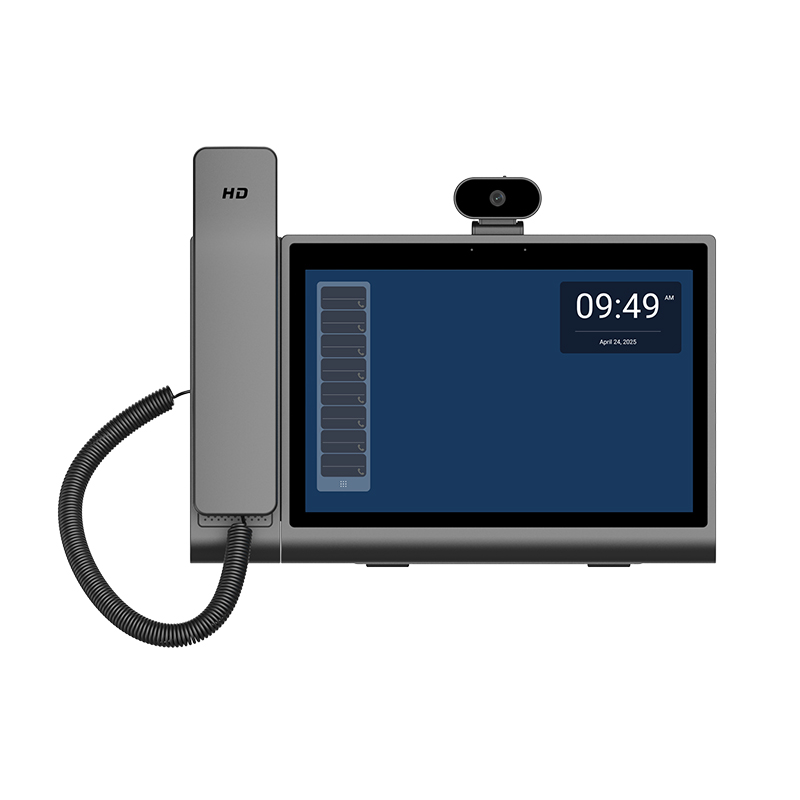
Hardware Evolution: Switching to the cloud doesn't mean abandoning physical hardware; a modern VoIP desk phone provides the familiar tactile experience with enterprise-grade cloud routing.
The Deciding Factor: The choice ultimately hinges on your facility's internet stability, specific regulatory compliance needs, and remote workforce distribution.
Understanding the fundamental technology driving each system clarifies their respective capabilities. Traditional landlines rely on the Public Switched Telephone Network (PSTN). They use physical copper wires to establish a dedicated, analog circuit between two callers. VoIP (Voice over Internet Protocol) utilizes packet switching. It breaks your voice into digital data packets and transmits them over a broadband internet connection.
The regulatory environment actively accelerates the shift toward cloud agility. The Federal Communications Commission (FCC) issued orders removing mandates for telecom carriers to maintain legacy copper infrastructure at capped prices. Telecom providers are aggressively decommissioning old lines. This signals a clear reality. Analog landlines have officially become legacy technology.
A successful enterprise communication system must balance several core criteria. You must evaluate any solution against these operational benchmarks:
Consistent, high-definition audio quality without noticeable latency.
Guaranteed uptime during localized power or network failures.
Robust data security protecting against interception.
Seamless integration within daily workflows, such as CRM synchronization.
Traditional setups run on analog lines connected to a localized Private Branch Exchange (PBX) server. Your IT team houses this server directly inside your facility. It physically routes calls to different desk extensions.
Legacy networks provide distinct physical reliability. They operate completely independently of localized internet outages. If your broadband connection drops, your analog voice service remains active. These systems are typically line-powered by the central telecom office. They stay fully functional during standard regional power grid failures.
Furthermore, legacy networks offer native, pinpoint-accurate E911 location tracking. When someone dials emergency services, dispatchers instantly see the exact physical address mapped to that dedicated copper wire.
Despite physical reliability, analog setups present severe operational friction. They require high upfront capital expenditures for PBX hardware. Routine maintenance demands expensive, specialized on-site technicians. Geographic limitations severely restrict modern workforces. You cannot easily route a business landline phone extension to a remote worker's home office. Scaling the network requires physical labor. Adding new lines means pulling literal copper wire through office walls.
VoIP bypasses physical copper networks entirely. It captures analog audio, compresses it into digital packets, and routes it through high-speed internet connections to cloud servers.
Cloud-based telephony dramatically lowers initial setup barriers. Businesses avoid purchasing heavy server hardware. Domestic calling rates remain significantly lower because data transmission avoids traditional carrier toll charges. The technology is inherently device-agnostic. Employees can answer business calls on a mobile application, a computer softphone, or a dedicated VoIP Desk Phone in the office.
These cloud systems include advanced routing features out-of-the-box. Administrators easily configure Interactive Voice Response (IVR) menus, call queuing, and voicemail-to-email transcriptions via a simple web browser.
Cloud telephony carries specific vulnerabilities. The system is entirely dependent on internet stability. A dropped internet connection means zero phone service. These networks are equally vulnerable to local power outages unless you deploy secondary backup solutions, such as Uninterruptible Power Supply (UPS) units. Furthermore, administrators must proactively configure network routers. You must implement Quality of Service (QoS) rules to prioritize voice traffic and prevent frustrating audio jitter.
Choosing the best infrastructure requires evaluating both systems across four distinct operational dimensions.
Traditional PBX systems demand heavy Capital Expenditure (CapEx). You purchase servers, wiring, and proprietary handsets upfront. Maintenance contracts add unpredictable secondary expenses. VoIP operates on an Operational Expenditure (OpEx) model. You pay a predictable, flat monthly subscription fee per user. Cloud providers handle all backend server maintenance and software upgrades.
Copper wires resist local power losses. However, a severed physical cable takes days to repair. Cloud telephony introduces geographic redundancy. If your physical office loses power or internet, the cloud server remains untouched. Administrators can instantly failover inbound calls. The system automatically routes incoming traffic to employee mobile devices or secondary branch locations.
Closed-circuit analog lines resist remote hacking, but someone can physically tap the copper box outside your building. Cloud systems rely on robust digital security. Reputable providers secure calls using Secure Real-Time Transport Protocol (SRTP) and Transport Layer Security (TLS) encryption. Modern cloud solutions also comply with updated federal regulations. They fully support Kari’s Law and the RAY BAUM’S Act, ensuring dynamic E911 location routing for remote users.
Adding ten new hires to an analog system creates massive friction. You must purchase expansion cards for your PBX, wire the desks, and configure proprietary hardware. Scaling a cloud system requires almost zero friction. An administrator logs into a web portal, adds ten new digital licenses, and provisions the accounts instantly.
System Evaluation Comparison
Evaluation Dimension | Legacy Landline System | Cloud Telephony System |
|---|---|---|
Financial Model | High CapEx for hardware; unpredictable maintenance. | Predictable OpEx subscription; low setup barriers. |
Disaster Resilience | Line-powered during localized electrical failures. | Geographic redundancy routes calls to mobile devices. |
Network Dependency | Operates independently of internet bandwidth. | Requires stable, high-speed internet and QoS. |
Scalability Speed | Requires physical wiring and hardware upgrades. | Instant digital provisioning via web portals. |
No single technology universally fits every business. You must map the system's architecture directly to your operational realities.
Your primary facility sits in a remote geographic area with a highly unstable internet service provider.
You operate in highly regulated environments requiring analog lines for specific hardware.
Your building utilizes legacy elevator emergency phones or security gates lacking digital adapters.
Your daily operations heavily depend on traditional analog fax machines.
Your company is scaling quickly and frequently adds new team members.
You operate multiple physical branch locations requiring unified internal extension dialing.
Your workforce is hybrid or fully distributed across different time zones.
You want to consolidate fragmented tools. Cloud telephony blends voice, video conferencing, and team messaging into one dashboard.
Execution defines the success of any technology transition. Moving away from copper infrastructure requires meticulous planning.
Never deploy cloud voice services without testing your local area network first. Evaluate your current internet bandwidth. Calculate the maximum number of concurrent calls your office handles. Check your routing equipment capabilities. You must implement QoS protocols before purchasing software licenses. This guarantees your network prioritizes voice data over standard employee web browsing.
Transitioning to the cloud does not mean losing your established business identity. The Federal Communications Commission mandates Local Number Portability (LNP). You can legally transfer your existing numbers to a new provider. However, this porting process takes time. Submit porting requests early. Maintain your legacy carrier contract until the port officially clears to avoid operational downtime.
Carefully evaluate how employees prefer to interact with incoming calls. Younger remote workers quickly adopt desktop softphones and mobile applications. Executive staff and receptionists generally prefer physical hardware. Deploying IP-enabled handsets ensures high-volume callers maintain their familiar tactile workflow. Balance digital flexibility with ergonomic comfort to ensure high adoption rates.
Traditional analog setups hold niche value for organizations prioritizing off-grid, physical wire reliability in areas with poor internet infrastructure. However, cloud telephony stands as the definitive choice for modern business continuity and digital agility. It simplifies scaling, ensures geographic redundancy during disasters, and heavily reduces infrastructure maintenance friction. Take immediate action to prepare your operations for the future. Audit your current local network speeds and examine your latest telecom billing statements. These steps will help you determine the exact bandwidth you have available to support a pilot migration program.
A: Yes. The Local Number Portability (LNP) mandate legally requires carriers to let you keep your established phone numbers. You simply submit a porting request to your new cloud provider. They handle the backend transfer process seamlessly.
A: Cloud networks feature geographic redundancy. If your physical office loses power, the core system remains active in the cloud. You can automatically failover inbound calls to employee mobile devices. Installing a UPS battery backup also keeps your on-site router and IP phones running temporarily.
A: You need approximately 100 kilobits per second (kbps) of upload and download bandwidth per concurrent call. While this footprint is very small, network stability matters more than raw speed. You must maintain low latency and minimal packet loss to ensure clear audio.
A: Not necessarily. You can run software applications on existing computers and smartphones. If you want to keep legacy analog desk units, you can purchase Analog Telephone Adapters (ATAs). Upgrading to native IP hardware provides better audio and easier management.