Views: 0 Author: Site Editor Publish Time: 2026-06-18 Origin: Site
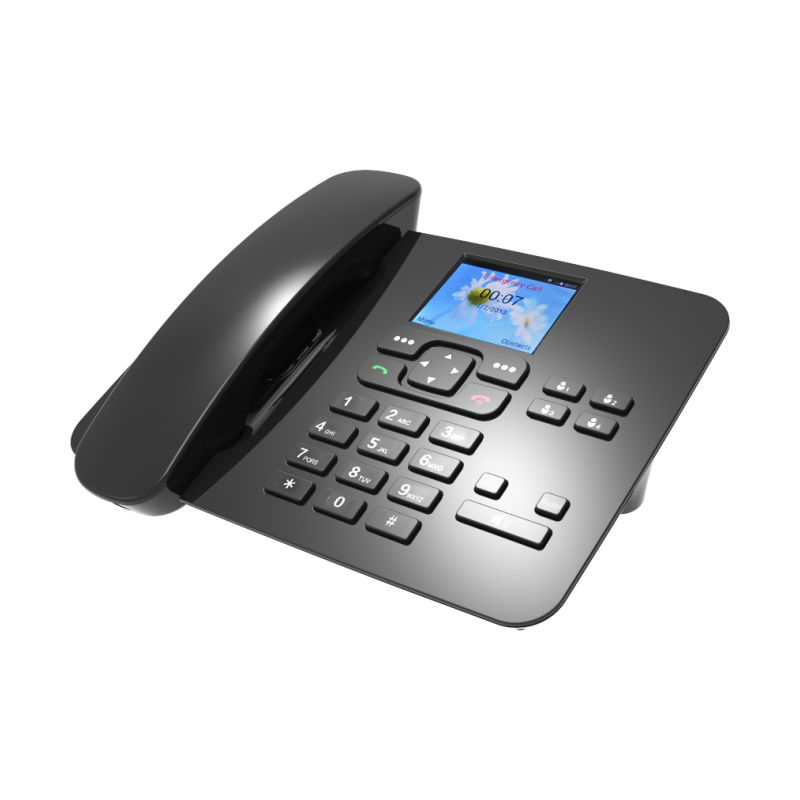
The telecommunications landscape is shifting rapidly as carriers actively phase out traditional copper telecom lines. This forced obsolescence, widely known as the POTS sunset, creates an urgent need for reliable alternative voice solutions. You cannot rely on outdated, decaying infrastructure anymore. Instead, modern alternatives offer a robust lifeline. We define the core concept clearly: a fixed wireless phone is a device retaining the physical form factor of a traditional desk phone. However, it operates entirely over 4G LTE or 5G cellular networks via an internal SIM card. Our objective is to provide a realistic, objective framework. You will use this framework to evaluate whether this hardware suits your specific communication needs. We cover remote setups, residential needs, and organizational deployment. Read on to learn about mechanical differences, evaluation criteria, and practical implementation realities.
A fixed wireless phone requires no wall jacks or physical internet cables—only a power source and reliable cellular coverage.
It serves as a direct drop-in replacement for traditional landlines, offering familiar hardware with modern VoLTE call routing.
Ideal for temporary job sites, rural locations, and users needing a dedicated home office phone distinct from their personal mobile device.
Primary adoption risks involve localized cellular dead zones and power dependency (though many models feature battery backups).
The physical hardware anatomy merits close inspection. Externally, these devices resemble standard desk phones perfectly. You will find a familiar handset, a numeric keypad, and a built-in speakerphone. Internally, however, they operate completely differently. The casing houses an advanced cellular radio. You insert a standard SIM card into a dedicated slot. Many models also include an external antenna port. This physical design ensures ergonomic comfort. Users interact naturally, just as they did decades ago. They simply lift the receiver and dial.
Next, consider the infrastructure bypass. Local exchange carriers traditionally routed calls through physical copper networks. A cellular desk unit completely circumvents this legacy system. It connects directly to nearby cell towers. You skip the physical copper wires completely. You also avoid routing calls through local Wi-Fi networks. This bypass creates absolute infrastructure independence. If a street crew accidentally severs the local fiber or copper cables, your connection remains highly active.
Finally, modern units utilize Voice over LTE technology. We commonly call this VoLTE. Older generations relied on analog cellular signals or basic digital bands. Those analog networks suffered from static and dropped connections. VoLTE routes voice traffic as digital packets over high-speed LTE networks. This packet-switching ensures high-definition voice clarity. Audio quality rivals or exceeds legacy copper connections. You hear callers clearly. They hear you without distortion. This leap in acoustic quality makes modern units highly dependable.
Decision makers must evaluate several core criteria before committing to new hardware. Signal dependency stands out as the most critical factor. Cellular limitations exist everywhere. You must check local carrier coverage maps before deploying equipment. Some locations suffer from weak signal penetration inside buildings. We strongly advise evaluating devices featuring external antenna support. You can attach high-gain directional antennas in marginal signal areas. These external antennas capture distant signals effectively. They stabilize the connection significantly.
We created a simple reference chart to help you gauge standard signal strength metrics. Cellular radios measure signal power in dBm (decibel-milliwatts).
RSRP Signal Range | Connectivity Quality | Action Required |
|---|---|---|
-70 dBm to -85 dBm | Excellent | Standard indoor setup sufficient |
-86 dBm to -100 dBm | Good | May benefit from optimal window placement |
-101 dBm to -115 dBm | Marginal | External high-gain antenna strongly recommended |
Power resiliency represents another vital evaluation metric. Traditional copper lines pulled minimal power directly from the central telecom grid. In contrast, a wireless landline phone requires local electricity to function. You must plug it into a standard wall outlet. Assess emergency reliability carefully. Grid failures happen frequently during severe weather. Highlight the necessity of evaluating built-in battery backup capacities. Manufacturers typically measure these batteries in standby hours and continuous talk time. A robust battery ensures continuous communication during extended neighborhood blackouts.
Finally, consider your hardware procurement pathways. You can choose carrier-subsidized models or unlocked hardware. Carrier-locked models often feature rigid contracts. However, they provide an easier initial setup process. The carrier configures the SIM automatically before shipping. Conversely, unlocked enterprise-grade hardware costs more upfront. You own the equipment outright. This network-agnostic approach provides tremendous long-term flexibility. If your primary network degrades, you simply swap the SIM card. You switch providers without replacing the physical device.
The cost to maintain legacy landlines is surging. Telecom providers are forcing obsolescence worldwide. They raise maintenance fees aggressively to discourage copper usage. Cellular alternatives offer predictable, flat billing instead. You avoid unexpected tariff hikes. Deployment speed also strongly favors cellular units. You achieve immediate plug-and-play functionality. Users simply power the unit on and start dialing. Conversely, landlines require waiting days for technician dispatches. You often pay extra for complex premise wiring and wall jack installations.
Voice over IP represents a popular modern choice. However, VoIP requires highly stable broadband internet. You need fiber, cable, or satellite internet running continuously. Cellular models operate completely independently of local internet outages. If your router fails, your desk handset keeps working perfectly. Complexity also differs sharply. VoIP requires extensive local network configuration. Administrators must manage Quality of Service rules. They must configure intricate firewalls. A cellular desk unit avoids this local network configuration entirely. It talks directly to the nearest tower.
Ergonomics play a massive role when comparing desk units to smartphones. Desk units offer vastly superior speakerphones. Handsets rest comfortably against the ear during long conference calls. Physical keys provide satisfying tactile feedback. Furthermore, a fixed device stays permanently at the desk. This permanence provides a unified contact point for an organization or household. It mitigates the inherent distractions of smartphones. Users do not wander off carrying the shared receiver. You never worry about an empty battery resulting from excessive mobile app usage.
Feature | Fixed Wireless | Traditional Landline | VoIP | Smartphone |
|---|---|---|---|---|
Infrastructure | Cellular Network | Copper Wiring | Broadband Internet | Cellular Network |
Deployment Speed | Instant | Slow (Technician needed) | Moderate | Instant |
Local Outage Immunity | High | High | Low | High |
Ergonomic Comfort | High | High | High (with hardphone) | Low |
Who should actually deploy these devices? Several distinct environments gain massive advantages from this standalone architecture. We outline the most impactful scenarios below.
Construction, Pop-Up Retail, and Temporary Sites: Rapid deployment scenarios demand instant connectivity. Waiting weeks for physical line installation is logistically impossible. Construction trailers move frequently from site to site. Pop-up shops exist for mere days. You simply place the unit on a desk and establish instant communication.
Remote Work and Rural Businesses: Many environments lack reliable broadband infrastructure. They cannot support stable VoIP calls. However, these same locations often maintain adequate cellular coverage. This combination makes cellular hardware an ideal home office phone. Remote workers gain a dedicated, professional voice line independent of their personal devices.
Elderly Care and Accessibility: Many elderly users require cognitive familiarity. They understand traditional receivers and physical dial pads intuitively. Modern touchscreens confuse some individuals. However, they often reside in facilities or rural homes where traditional landlines are no longer serviced. This hardware bridges the gap perfectly. They keep their familiar experience intact.
Business Continuity and Redundancy: Modern organizations rely heavily on unified communications platforms. What happens when the primary local internet goes down? Companies keep a cellular-based desk unit active strictly as a failover. This redundant line ensures critical inbound calls always connect during severe local network outages.
We must address the compliance and safety realities of rollout phases. Location tracking presents a unique challenge for emergency services. Because the device connects via cell towers, emergency responders rely on cellular triangulation. They may not instantly pinpoint your exact room or floor. A hardwired landline instantly transmits an exact physical address. You must strictly adhere to address registration requirements. Always register the physical location associated with the SIM card through your carrier portal. Update this address if you move the device.
Security protocols require careful verification. Cellular voice is inherently encrypted over the air. Carriers use strong encryption protocols between the handset and the tower. However, organizations handling sensitive data must remain vigilant. Healthcare or financial entities must verify specific hardware. Ensure the manufacturer adheres strictly to standard cellular security protocols. Do not assume all consumer-grade hardware meets strict compliance standards right out of the box.
Finally, data plan optimization prevents wasted resources. We strongly warn against over-provisioning your cellular accounts. Voice-only fixed wireless devices consume minimal data bandwidth. They do not stream video or download large files. We advise procuring voice-only packages. Alternatively, utilize low-data IoT SIM plans. Do not purchase expensive unlimited smartphone plans for a device strictly handling voice traffic. You will pay for gigabytes of data you never consume.
These specialized units successfully bridge the gap between legacy hardware familiarity and modern cellular agility. They eliminate reliance on degrading copper wires. They provide robust, standalone communication independent of local broadband failures. Organizations and individuals secure highly reliable voice channels by leveraging ubiquitous cellular networks. The physical hardware remains familiar, while the backend technology stays cutting-edge.
We highly recommend conducting a site-specific cellular signal test as your immediate next step. Use a standard smartphone operating on your intended carrier network. Walk through the exact rooms where you plan to install the hardware. Verify strong signal bars before procuring any equipment. This simple validation step ensures a flawless deployment and crystal-clear audio.
A: Yes, standard local number portability rules apply seamlessly. You can port your existing landline or mobile numbers directly to the new cellular SIM card. This process typically takes a few business days to complete.
A: No, it relies entirely on dedicated cellular data networks. You do not need a local broadband connection, a router, or a Wi-Fi network. The unit communicates directly with local carrier cell towers.
A: It will only work if the specific model includes an integrated, fully charged backup battery. Alternatively, you must connect the unit to an external uninterruptible power supply. Most models feature internal standby batteries.
A: Generally, no. Traditional analog fax protocols frequently fail over digital cellular voice compression networks. You will experience high error rates. We strongly emphasize utilizing modern e-fax alternatives for document transmission.