Views: 0 Author: Site Editor Publish Time: 2026-08-12 Origin: Site
Parents face a massive dilemma today. You need reliable emergency contact and location tracking for your child. Yet, you desperately want to avoid exposing them to the unfiltered internet, dangerous social media algorithms, or addictive screens. Finding the right balance often feels completely impossible. An "emergency phone" means something highly specific in today's market. It prioritizes utility, physical durability, and completely secure communication over mindless entertainment. You want a life-saving tool, not a digital toy.
This guide provides an objective framework to solve this exact problem. We will deeply evaluate dedicated communication hardware and compare the major device categories available. You will learn how to make a secure, privacy-compliant purchasing decision without compromising your family's peace of mind or your child's digital safety.
Standard smartphones equipped with third-party tracking apps often fail in emergencies due to battery drain, software bypasses, and distraction.
The most reliable emergency devices rely on purpose-built hardware with native, non-removable GPS and closed-network communication.
Essential evaluation criteria include dedicated SOS hardware buttons, True GPS (vs. cell-tower triangulation), and COPPA-compliant data privacy.
Choosing the right device requires balancing the child's age, carrier compatibility, and the device's resilience against tampering.
Standard smartphones seem like an easy fix for concerned parents. You buy a phone, install a tracking app, and hope for the best. But these consumer devices consistently fail when emergencies strike. We must understand these technical failures clearly to make better hardware choices.
High-resolution screens drain batteries incredibly fast. Background apps constantly consume valuable power. Social media notifications ping endlessly throughout the school day. By the time an actual emergency occurs, the device is often completely dead. You simply cannot rely on a drained battery during a crisis. Standard consumer phones prioritize performance over longevity. Your child needs a dedicated device engineered specifically for standby endurance.
Tech-savvy kids easily figure out digital workarounds. They disable location permissions quickly in the settings menu. They delete third-party monitoring apps without hesitation. Sometimes they even use VPNs to hide their network activity. These actions circumvent software-level parental controls entirely. A simple downloadable app offers a false sense of security.
Common Mistake: Relying solely on aftermarket family tracking apps. Operating systems often put background apps to sleep automatically to save power, breaking your location feed without warning.
Smartphones operate as entertainment devices first. This reality directly contradicts the core requirement of an emergency tool. An emergency device requires an instant response. It must serve a single purpose. Endless mobile games, group chats, and viral videos distract users heavily. Children miss urgent calls easily when immersed in a screen. A focused, single-purpose tool eliminates these hazardous distractions completely.
Choosing secure hardware requires careful technical analysis. You must evaluate specific hardware capabilities instead of trusting flashy marketing claims. The components inside the device determine its reliability during an actual crisis.
You must understand how modern devices calculate location. Location-Based Services (LBS) use cellular tower triangulation. This method estimates location based on signal strength between towers. It is often only accurate to within several city blocks. True GPS relies directly on satellite signals overhead. It pinpoints exact geographical coordinates down to a few meters.
However, we must acknowledge strict physical limitations. GPS signal degradation happens frequently indoors. Thick concrete walls block satellite signals. Dense urban areas with tall buildings also cause multipath errors, confusing the receiver. The best hardware combines GPS, Wi-Fi mapping, and LBS seamlessly.
Best Practice: Always check your parent mapping app to see if it displays a "GPS" or "LBS" indicator next to the location pin. This tells you the current accuracy level.
A reliable communication device needs a physical, dedicated panic button. Touchscreen buttons fail routinely during panic situations. Sweaty or shaking hands cannot operate smooth glass screens reliably. A physical button provides tactile feedback instantly.
We define the ideal SOS workflow as follows:
Automatic sequential dialing of pre-set emergency contacts (calling Mom, then Dad, then Grandma if unanswered).
Live audio broadcasting to the parent's phone, allowing you to hear the surroundings.
Instant location pinging sent via high-priority push notification.
You must absolutely control who contacts your child. Closed-network whitelisting locks down all inbound and outbound communication securely. The device only accepts calls and texts from a pre-approved list managed by you. This strict setup blocks spam callers immediately. It keeps online predators completely away. Unverified numbers simply drop upon dialing, never ringing the device.
Data privacy matters deeply when tracking minors. Location data reveals highly sensitive daily routines. You must demand end-to-end encryption for all transmitted location data. The hardware manufacturer must strictly adhere to COPPA regulations. The Children's Online Privacy Protection Act legally restricts how companies collect and store youth data. Never compromise on federal privacy compliance when evaluating communication tools.
Different device architectures serve different age groups and maturity levels. We compare the primary hardware categories below to help you match technology to your family's specific needs.
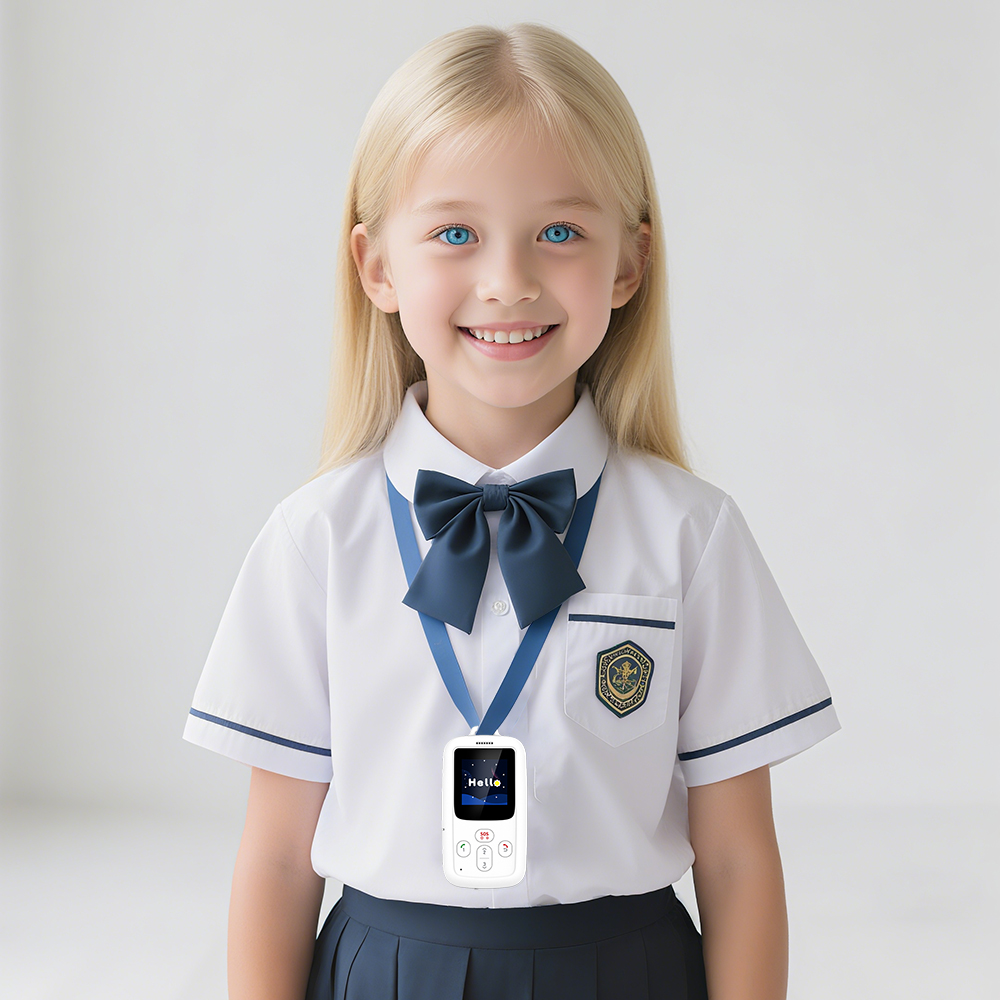
Smartwatches offer excellent entry-level security for younger children aged 5 to 9.
Pros: They are wearable, making them significantly harder to lose on a playground. They feature integrated SOS buttons directly on the side chassis. The software environment remains highly restricted, offering zero access to browsers or social networks.
Cons: The limited physical battery size requires daily charging routines. Smaller internal antennas result in noticeably weaker cellular reception compared to larger handsets. Typing detailed text messages is quite difficult on tiny screens.
Basic feature phones remove digital temptations completely, fitting the pre-teen demographic well.
Pros: You get excellent, multi-day battery life. The hardware is highly durable against accidental drops. It eliminates internet browsing and application downloads entirely.
Cons: Old-school T9 texting heavily frustrates modern users. Furthermore, many standard feature phones lack precise, app-synced GPS tracking for parents, relying instead on basic cellular network location.
These specialized devices safely bridge the gap for older children and young teenagers.
Pros: The hardware looks exactly like a normal modern device. This aesthetic greatly reduces social stigma for older kids. They feature highly accurate native GPS antennas. They also offer deep parental control over pre-approved applications, such as maps, calculators, or educational tools.
Cons: They carry a higher upfront hardware cost. Parents require careful vetting of the manufacturer's firmware to ensure restrictions cannot be bypassed.
You must rely on OEM-level (Original Equipment Manufacturer) restrictions. Factory-level security is inherently safer than aftermarket software applications. For instance, devices engineered by a specialized kid Phone supplier Kaer are designed at the core firmware level. They completely prevent operating system rooting. Kids cannot uninstall fundamental tracking features. Unauthorized data sharing is blocked natively by the operating system. Choosing hardware from an established innovator like Kaer ensures your child's data remains entirely secure and untouchable by third-party advertisers.
Device Category Comparison Chart
Device Architecture | Average Battery Life | GPS Accuracy Level | Tamper Resistance Level |
|---|---|---|---|
GPS Smartwatch Wearable | Low (12-24 hours active) | Medium | High |
Basic Feature Phone | High (3-5 days active) | Low | Medium |
Locked-Down Smartphone | Medium (1-2 days active) | High | High |
Buying the correct hardware is only step one. Successful deployment requires careful environmental planning and household communication. Technology fails if the human element rejects it.
No GPS tracking feature works without a reliable cellular data connection. Satellites calculate the location from space. But the device desperately needs cellular data to transmit that coordinate back to your parent application. You must test primary operational zones personally. Walk the daily school route. Check inside the home. Visit regular extracurricular venues. Look actively for cellular dead spots.
Common Mistake: Purchasing hardware tied to a budget carrier, only to discover the carrier has absolutely no indoor coverage at your child's middle school.
Your child might naturally resist carrying a tracking device. You must establish transparent, honest communication early. Explain clearly why the tracking feature exists. Frame the conversation around personal safety, not parental surveillance. This upfront honesty prevents future resentment. It directly prevents deliberate device abandonment. When kids understand the true safety purpose, they cooperate much better.
Never assume a complex technical system works perfectly out of the box. You should run monthly "fire drills" at home. We highly recommend this specific verification workflow:
Press the physical SOS button and count the exact seconds until the alarm triggers.
Verify your parent application receives the push notification instantly.
Answer the automated emergency call to test the microphone audio clarity.
Monitor the battery drain percentage after one full hour of active, real-time tracking stress.
Finding the safest solution requires clear priorities and uncompromising technical standards. We must look far beyond flashy touchscreens and game libraries to protect our families.
Final Assessment:
The best emergency communication hardware prioritizes physical SOS buttons over app stores. It demands locked, untamperable firmware over open operating systems. It strictly requires accurate, true satellite location mapping over flashy entertainment features. Reliability always beats entertainment during a real-world crisis.
Next Steps:
Audit your local cellular network coverage zones before purchasing any hardware.
Define your exact feature requirements based heavily on the child's specific age and maturity level.
Evaluate hardware strictly from reputable manufacturers. Look exclusively for telecom companies specializing in secure, youth-focused hardware architecture.
Establish firm household rules regarding device charging and carrying responsibilities.
A: No, not effectively. Hardware satellites calculate the GPS coordinates entirely without a network. However, transmitting that exact coordinate data back to your parent app requires an active cellular data or Wi-Fi connection. Without a network plan, the device knows exactly where it is, but it cannot communicate that location to you.
A: Accuracy varies significantly by hardware quality and environment. Standard geofence radii usually span between 100 and 500 meters. Built-in Wi-Fi mapping helps improve indoor accuracy tremendously. Alert latency heavily depends on the device's polling frequency. A device checking its location every minute alerts you much faster than one checking hourly.
A: Yes. Strict federal regulations require all cellular devices to connect to 911, even without active network plans. However, purpose-built youth devices frequently route primary SOS button calls to parents first. This specific workflow prevents accidental emergency service dispatches while keeping official 911 access readily available via the standard dialing keypad.
A: Continuous live GPS tracking drains small batteries very quickly. You can expect realistic standby estimates between 12 and 36 hours. Adjusting the location "ping" frequency drastically impacts this metric. Updating the location every 15 minutes saves massive amounts of battery power compared to real-time, second-by-second live mapping feeds.